

 Pediatric Eye Exam
 Diabetic Eye Exam
 Locate Us
Slowing Down Nearsightedness: Myopia Control Options for Round Rock Kids
Blog:Slowing Down Nearsightedness: Myopia Control Options for Round Rock Kids
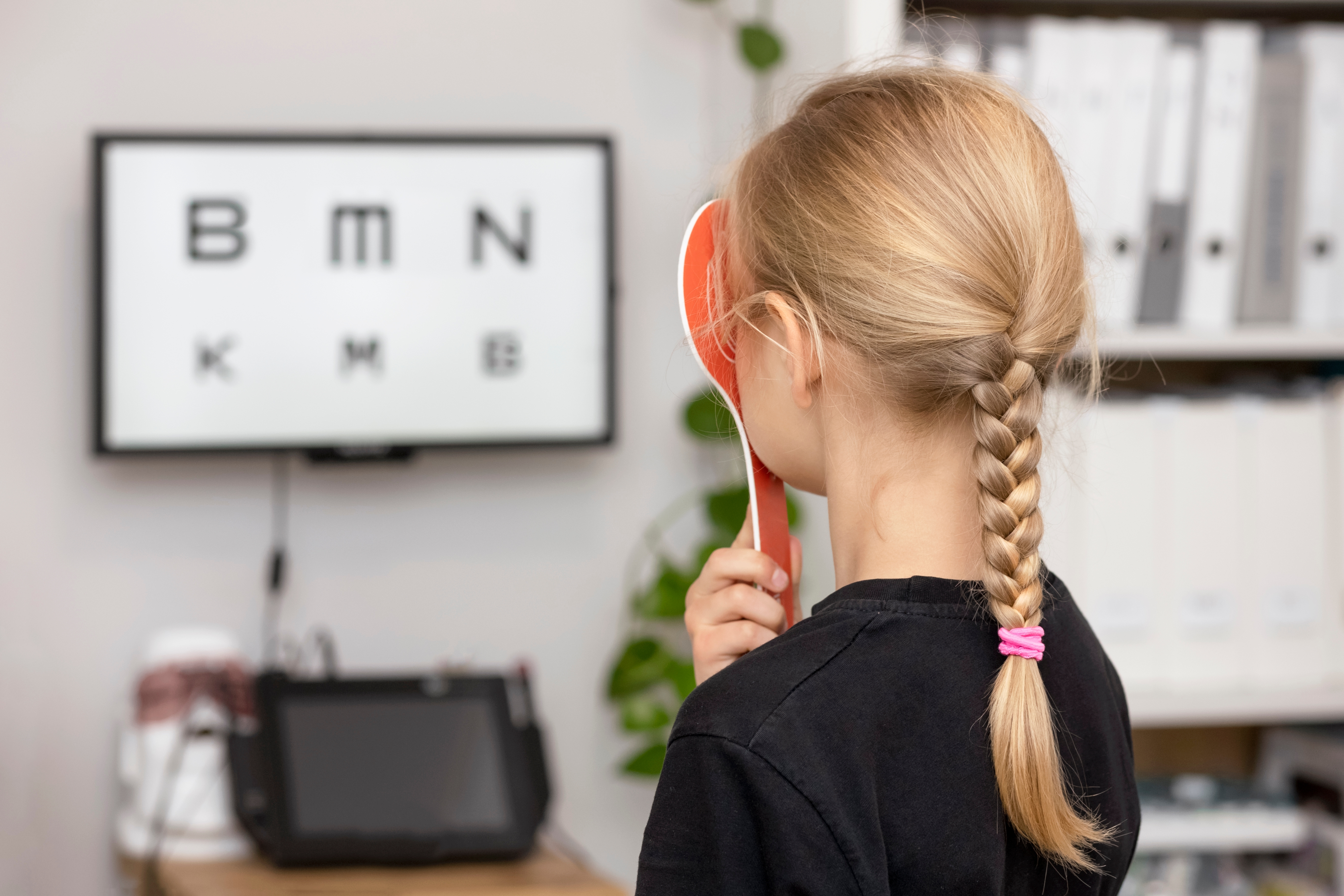
Slowing Down Nearsightedness: Myopia Control Options for Round Rock Kids
If your child's glasses prescription seems to get stronger each year, myopia may be progressing. Myopia, also called nearsightedness, causes distant objects to look blurry and often develops or increases while children are growing. While regular glasses can provide clear vision, ordinary single-vision glasses do not slow myopia progression.
At Texas State Optical Round Rock, we offer myopia management for children, including MiSight 1 day contact lenses and low-dose atropine eye drops. The right approach depends on your child's prescription, age, eye health, lifestyle, and how quickly their myopia is changing.
Why Does Slowing Myopia Matter?
Myopia often progresses as the eye grows longer. Higher levels of myopia are associated with an increased lifetime risk of eye conditions such as retinal detachment, glaucoma, cataracts, and myopic maculopathy.
Myopia control cannot guarantee that a child's prescription will stop changing completely. Instead, treatment aims to slow the rate of progression.
For Round Rock families, starting with a comprehensive pediatric eye exam allows us to evaluate current vision and determine whether a myopia management plan may be appropriate.
What Is MiSight 1 Day?
MiSight 1 day is a daily disposable soft contact lens that provides vision correction while also slowing myopia progression. Its specialized optical design allows children to see clearly while creating treatment zones intended to influence eye growth.
FDA labeling specifies treatment initiation for children ages 8 through 12 with healthy eyes, myopia from -0.75 to -4.00 diopters, and no more than 0.75 diopters of astigmatism.
MiSight may be worth considering when a child:
Meets the appropriate prescription and eye health requirements
Is comfortable learning to insert and remove contact lenses
Can follow proper handwashing and lens hygiene
Is responsible enough to follow a daily lens routine
Can attend recommended follow-up appointments
MiSight lenses should be discarded after each removal. They should not be reused or slept in.
How Do Low-Dose Atropine Drops Work?
Low-dose atropine is another option used to slow myopia progression in children. The drops are generally used at home according to the schedule prescribed by the eye doctor, often at bedtime.'
Exactly how atropine slows myopia progression is not fully understood, but research has shown that certain low concentrations can reduce progression in some children. Atropine use for myopia control is considered off-label in the United States.
Possible side effects can include light sensitivity or difficulty focusing at near, depending on the concentration and individual response. Children using atropine still require glasses or contact lenses to correct their blurry distance vision.
Which Myopia Control Option Is Right for Your Child?
There is no single treatment that is best for every Round Rock child. MiSight may appeal to children who are ready for daily contact lenses and want their vision correction and myopia management combined in one option. Atropine may be appropriate for children who are not ready for contacts or whose individual circumstances make eye drops a better fit.
Regular monitoring is important with either approach. Tracking prescription changes and eye growth over time helps us determine how well treatment is working and whether adjustments are needed.
What Else Can Parents Do?
Genetics and visual environment can both influence myopia. Encouraging children to spend time outdoors and take regular breaks during prolonged reading, homework, and screen use can support healthy visual habits. These steps, however, do not replace prescribed myopia management when treatment is recommended.
If your child's distance vision is getting blurrier, they are squinting to see the classroom board, or their prescription continues to increase, contact Texas State Optical Round Rock at 1150 North I-35 Suite 500, Round Rock, TX 78681 by calling (512) 828-5500 to schedule a pediatric eye exam and discuss myopia control options.
Quick Links
Helpful Articles
article_category: surgical procedures
article_category: ocular disease management
article_category: products
article_category: eye health
article_category: services
article_category: contact lenses
article_category: technology
article_category: eye surgery co-management
article_category: eyeglasses
[]
article_category: ocular disease management
article_category: products
article_category: eye health
article_category: services
article_category: contact lenses
article_category: technology
article_category: eye surgery co-management
article_category: eyeglasses
[]
Flowbite is an open-source library of interactive components built on top of Tailwind CSS including buttons, dropdowns, modals, navbars, and more.
Check out this guide to learn how to get started and start developing websites even faster with components on top of Tailwind CSS.

All Eyecare Services
We offer a wide variety of eye care services to the Round Rock community. Contact us with any questions about our services.

Keep In Touch
For non-urgent questions or to learn more about our services, contact us today!

Contact Information
Office Hours
- Monday 9:00 AM - 5:30 PM
- Tuesday 10:00 AM - 7:00 PM
- Wednesday 9:00 AM - 5:30 PM
- Thursday 10:00 AM - 7:00 PM
- Friday 9:00 AM - 5:30 PM
- Saturday 9:00 AM - 1:00 PM
- Sunday Closed
- Monday
- Tuesday
- Wednesday
- Thursday
- Friday
- Saturday
- Sunday
- Monday
- Tuesday
- Wednesday
- Thursday
- Friday
- Saturday
- Sunday
© 2026 Texas State Optical. All rights Reserved - Accessibility Statement - Privacy Policy - Terms And Conditions - Sitemap
Managed and Designed by 